An AI SDR takes the first conversation with every visitor, instantly and at any hour. Human SDRs are better at negotiation, judgement and relationships. Most teams use both.
What each does best
| AI SDR | Human SDR | |
|---|---|---|
| Speed | Replies in seconds, at any hour | Working hours, one call at a time |
| Scale | Every visitor at once | Limited by the team's time |
| Consistency | The same questions and answers every time, from approved content | Varies by person and day |
| Languages | 30+ languages | The languages the team speaks |
| Judgement and negotiation | Hands over to a person | Strong |
| Relationships | The first conversation | Trust built over months |
How the hand-off works
The AI agent answers questions from your approved knowledge, qualifies the visitor in conversation (need, timeline, role, company) and, when they're ready, books the meeting into the right person's calendar. Your rep gets the lead with a summary and the full transcript, so the first call starts where the conversation left off.
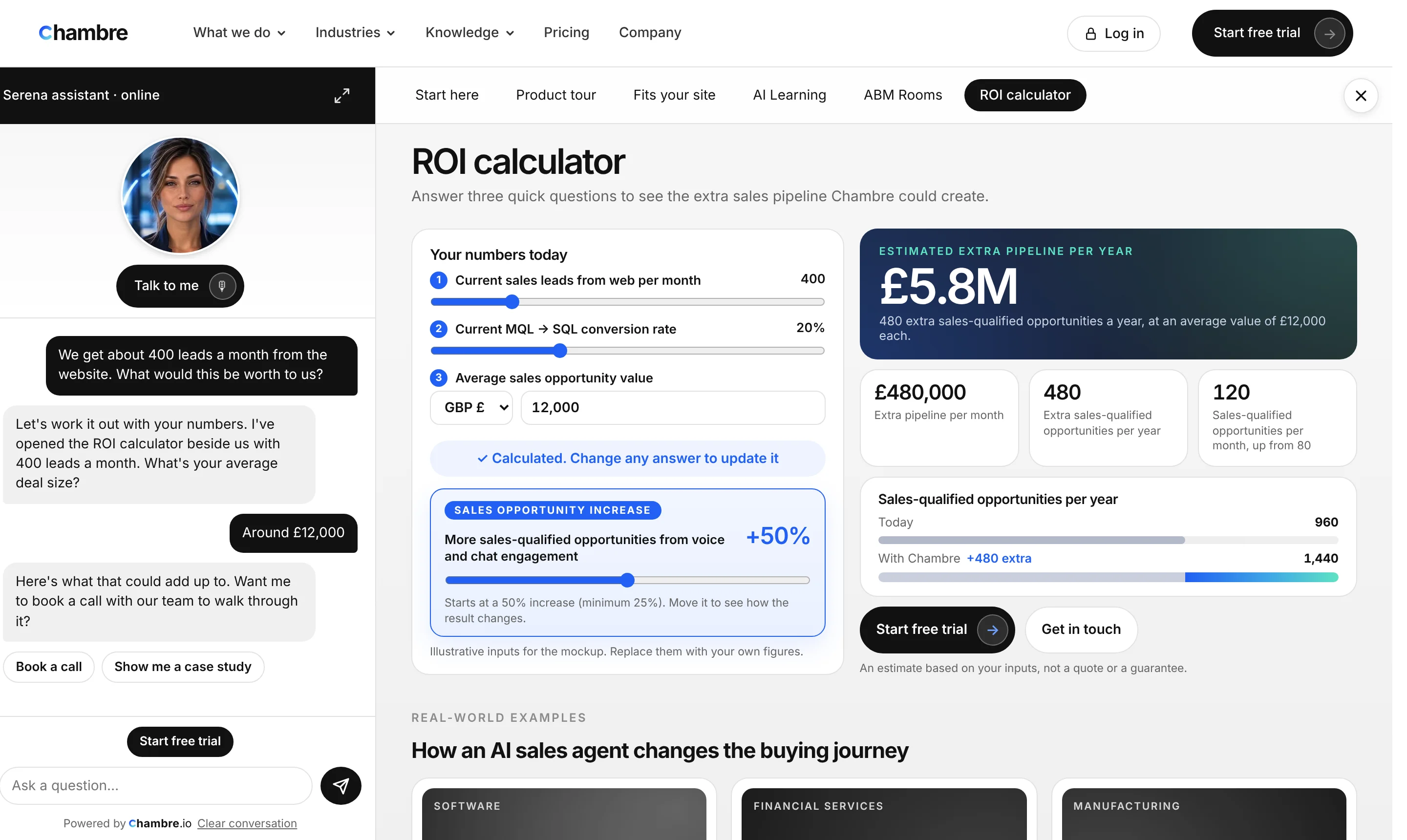
The agent qualifies the visitor and shows their numbers in the conversation. Sample figures for illustration.
When to start with AI
- Enquiries arrive out of hours or wait too long for a reply.
- Your SDRs spend time on people who were never a fit.
- Visitors leave your pricing and product pages without getting in touch.
- You sell internationally and can't cover every language.
Start with one job, usually answering website visitors and booking qualified meetings, and agree the hand-off rules with your sales team first.